Interested in animals and health care?
A career in veterinary medicine could be in your future!
Veterinary medicine focuses on animal health and the study of diseases that affect all animal species. Veterinarians are trained in basic and clinical sciences with relation to a variety of species, including food-producing animals, horses, companion animals, exotic pets, fish and wildlife.
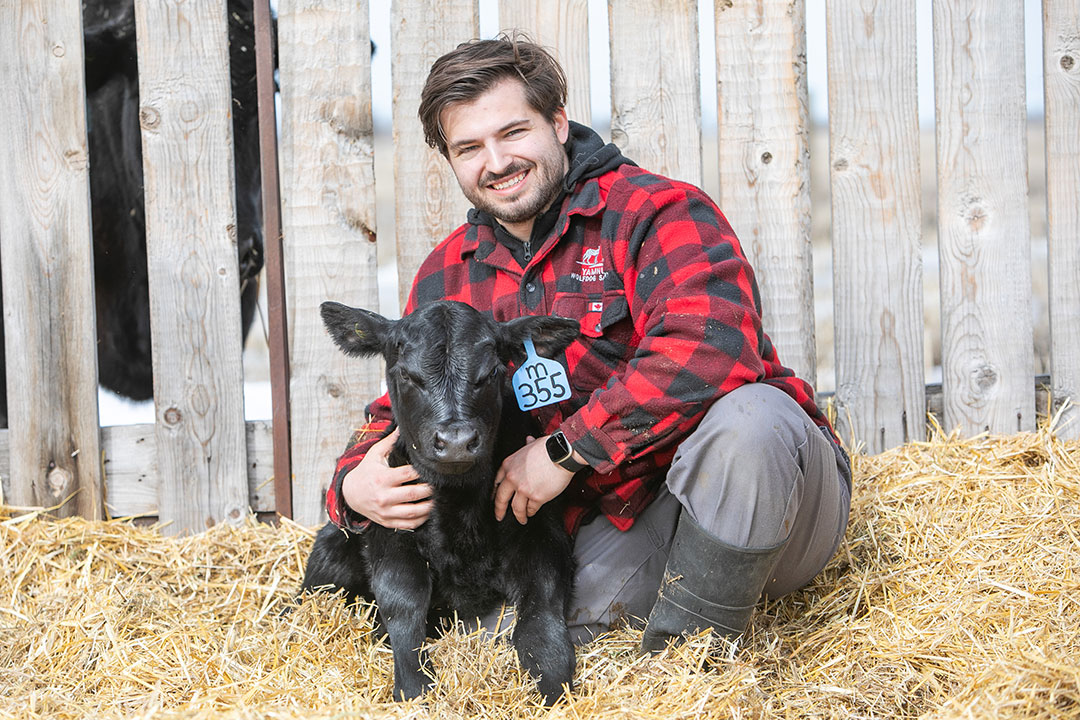
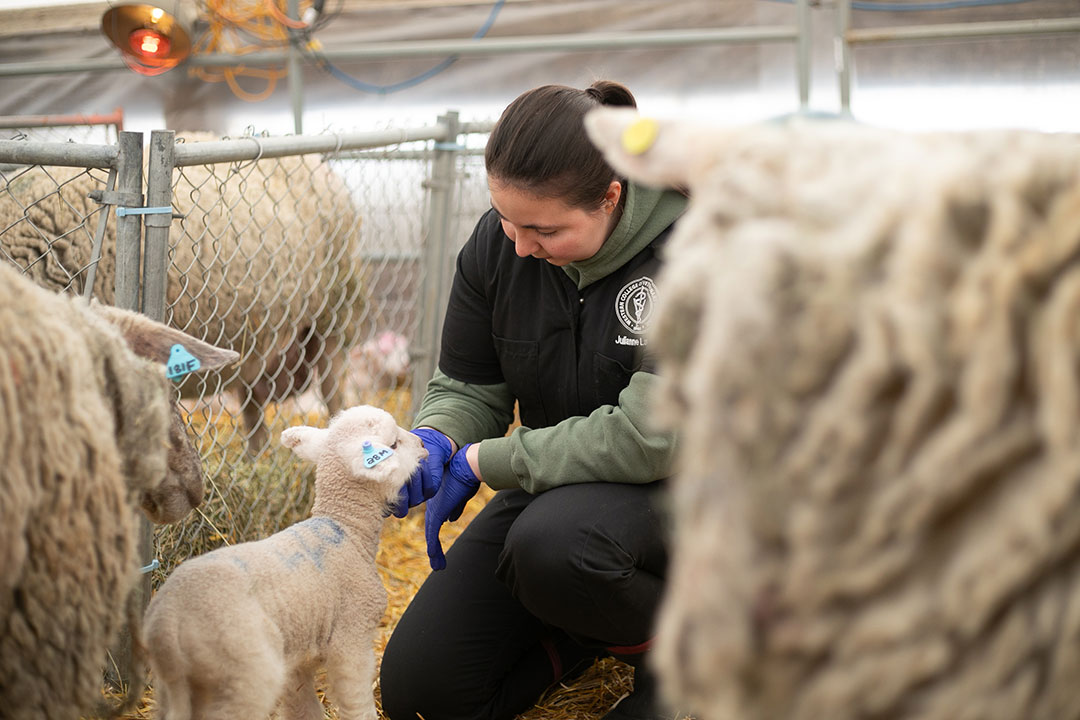
About the WCVM
The Western College of Veterinary Medicine (WCVM) at the University of Saskatchewan (USask) is the veterinary college for students living in British Columbia, Saskatchewan and Manitoba and the Canadian territories.
The Doctor of Veterinary Medicine (DVM) program at the WCVM provides future veterinarians with all the skills and knowledge they need for an exciting career in veterinary medicine!
Graduates of our veterinary program are trained to provide veterinary care for a wide range of animal species including companion animals (cats and dogs), exotic pets, horses, livestock and wildlife.
Students also have opportunities to gain knowledge and skills in special interest areas such as surgery, internal medicine, medical imaging, dentistry, ophthalmology, wildlife medicine or public health — to name a few.
Each year, the WCVM accepts 88 students from British Columbia, Saskatchewan, Manitoba and the northern territories for its four-year DVM program. The college offers designated seats for Indigenous applicants.
The WCVM also allocates seats for applicants who plan to work in the agriculture industry once they graduate from the DVM program. These seats are intended to address the shortage of food animal veterinarians in rural communities. Learn more about the WCVM’s agriculture-focused seats.
Please note: Alberta residents are not eligible to apply to the WCVM.
Doctor of Veterinary Medicine (DVM)
Career options
There are several career paths to choose from in veterinary medicine.
Clinical practice
Provide health care for companion animals and exotic pets, treat horses and livestock, work in an emergency clinic.
Specialized disciplines
Provide specialized care and expertise in areas such as veterinary oncology, cardiology and ophthalmology.
Public health and One Health
Protect food safety, monitor and prevent illnesses in livestock herds, and detect diseases that can be transmitted between animals and humans.
Research or academia
Teach at a veterinary college or work as a scientist in animal health and human health research.
Industry
Develop food products, drugs and technologies for animals.
Meet our students
Learn about our students and their journeys to becoming veterinarians.
Loading...

Preparing to become a veterinarian
Your journey to becoming a veterinarian starts now! As a high school student, here are the steps you can take to set yourself up for success.
Take the right classes in high school.
While there are no specific high school requirements for the WCVM’s veterinary program, the following high school courses are often required for pre-veterinary courses at university.
- Grade 12 level mathematics (pre-calculus recommended)
- Grade 12 level biology
- Grade 12 level chemistry
- Grade 12 level physics
Plan your post-secondary education.
It takes four years to complete the DVM degree program at the WCVM. Before applying, you must complete at least two years (60 credit units) of pre-veterinary courses at an accredited university.
There is no preferred university, college or degree program for the university-level pre-veterinary courses.
Veterinary medicine is a challenging program to get into. Most students will apply more than once and complete 3-4 years of univeristy studies prior to being accepted. We recommend that you work toward a back-up plan. Our advice to students: choose an institution and program that supports your academic interests and alternative career plans.
There are many areas of study that you could pursue for your two years of pre-veterinary courses. Talk to an academic advisor to ensure that you choose the correct courses.
Gain hands-on experience.
Now is the time to gain some animal and veterinary experience! Look for opportunities that give you a diverse range of experiences working with different animal species. Maximize your exposure to find out what areas of veterinary medicine interest you most!
- Shadow a veterinarian
- Volunteer or work at a veterinary clinic
- Volunteer at an animal shelter or with an animal-related organization
- Work on a farm or at a zoo
- Participate in animal-related hobbies
- Get involved in science and research
Strengthen your communications skills.
Communication and leadership skills are also important for a veterinarian. Consider taking a course or training to build your skillset!
Myths
Don’t let these myths stop you from pursuing a career as a veterinarian!
MYTH: You need to have a 90 per cent average in high school.
TRUTH: While a certain average in high school courses is required for post-secondary programs, your high school grades aren’t considered for your application to the WCVM’s veterinary program.
MYTH: You must have an agriculture background.
TRUTH: Growing up on a farm may provide you with practical animal experience, but there are many other ways to gain experience. Our students come from both urban and rural backgrounds.
MYTH: You must take an agriculture degree for pre-veterinary requirements.
TRUTH: Agriculture-related and animal science degrees are not the only option for the post-secondary requirements. Biology, science and health-related degree programs are also great options!
MYTH: Veterinarians interact with animals, not people.
TRUTH: As a veterinarian, you will work with people just as often as you do with animals. Knowing how to communicate well with others is an important part of the job!
Admissions
Think veterinary medicine is for you?
Visit our admission information page for more detailed information on the WCVM veterinary medicine program, tuition and the application process.
Stay connected
Do you want to receive updates and more details about upcoming WCVM information sessions for high school students?